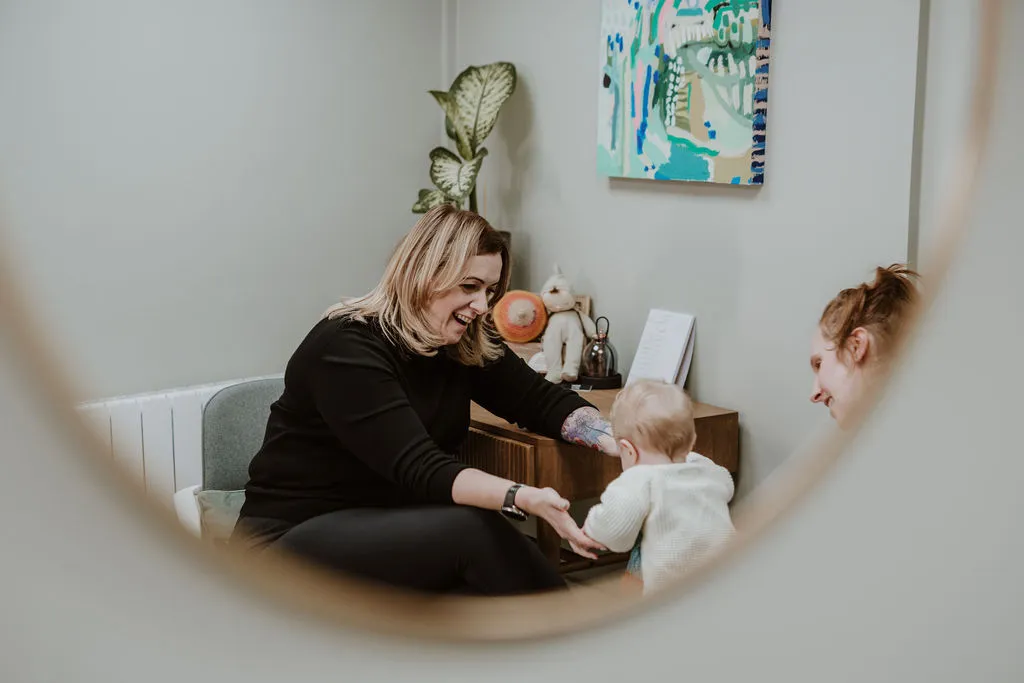
The Flat-Surface Standoff: Why Your Baby Won't Lie Down to Sleep
If this sounds familiar, you are not alone. This is one of the most common and exhausting challenges we hear about from parents at our Wilmslow Clinic. If you’re wondering why your baby hates lying flat, we promise there are very real reasons. It’s often a mix of their deep-seated need for closeness, feeding issues, and potential underlying physical discomfort.
Let’s explore the two biggest culprits: their deep-seated, biological need for closeness and potential underlying physical discomfort. It isn’t what the sleep trainers tell you.
Welcome to the Fourth Trimester
First things first, let’s step into your baby’s tiny shoes. For nine months, their entire world was your womb. It was warm, dark, and noisy with the constant rhythm of your heartbeat and the gurgle of your digestion. They were snugly held, constantly moving with you, and never, ever felt alone or hungry. Then they are born. Suddenly, the world is bright, vast, and sometimes alarmingly quiet. Lying flat on their back in a cot is the complete opposite of everything they have ever known. It’s cold, still, and they are separate from you. For a tiny human who is biologically wired for survival through closeness, this feeling of separation can be terrifying. It can trigger their Moro (or startle) reflex, making them fling their arms out and wake themselves up. Being held in your arms, however, is a different story. It recreates the womb: Warmth: Your body heat keeps them at the perfect temperature.
Sound: They can hear and feel your heartbeat, a deeply comforting and familiar sound.
Movement: Your gentle rocking mimics the motion they felt in utero.
Security: Being held close makes them feel safe and protected.
This intense period of adjustment is often called the ‘fourth trimester’. During these first three to four months, your baby isn’t trying to be difficult; they are simply trying to find safety and security in this huge new world. Their need to be held is a primal, biological instinct.
While the fourth trimester explains so much, sometimes there’s an underlying physical reason why lying flat is a no-go.
While the fourth trimester explains so much, sometimes there’s an underlying physical reason why lying flat is a no-go. If your baby seems truly distressed, arches their back, or cries inconsolably when laid down, it might be a sign that they are uncomfortable.
Here are a few common physical issues we see at the clinic:
1. Trapped Wind A newborn’s digestive system is brand new and very inefficient. They can easily swallow air during feeds, leading to painful trapped wind. When a baby is held upright or snuggled against your shoulder, gravity helps them to bring up burps and pass wind. When they lie flat, that wind can get stuck, creating painful pressure in their little tummy.
2. Reflux and Silent Reflux Reflux is when stomach contents, including acid, travel back up the oesophagus. While some spitting up is normal, for some babies this can be painful. When they lie flat, it’s much easier for that acidic milk to wash back up, causing a burning sensation similar to heartburn in adults. You might not always see spit-up (this is known as ‘silent reflux’), but it’s just as uncomfortable. Lying down equals pain, so naturally, they communicate this discomfort to you.
3. Muscular Tension from Birth The journey into the world can be a strenuous one! Twisting and turning through the birth canal can leave babies with tension in their bodies, particularly in their neck, shoulders, back, and even their diaphragm (the big muscle under the lungs that helps with breathing). When you lay them flat, it can stretch these tight, sore muscles in an uncomfortable way, causing them to cry out. You might notice they always turn their head to one side or seem to prefer being held in a specific position – these can be clues to underlying tension.
So, What Can You Do?
Navigating this is a process of loving detective work. Here are a few things to try:
Embrace the Fourth Trimester: You cannot spoil a newborn. Enjoy lots of skin-to-skin contact, and snuggle in with them to create a space of warmth and safety. Regular feeding is key to comfort.
Try Babywearing: A sling or carrier can help your baby feel contained and secure, preventing their startle reflex from waking them.
Help That Tummy: Practice ‘bicycle legs’ and gentle tummy massages to help release wind. Ensure you hold your baby upright for at least 20 minutes after a feed.
Keep the Cot Close: Try transitioning from the same position – lie down together, then gently slide baby over to their cot. The transition from your warm arms to a lower place can be jarring.
When to Seek Help If Your Baby's Sleep Is Disrupted
Being a parent is tough, and you are doing an amazing job. But if you’ve tried everything and your gut tells you that your baby is truly uncomfortable, it might be time for some support.
By seeing a Lactation Consultant who can help in identifying areas of strain from birth causing feeding and sleep issues, we can help improve your baby’s comfort, which can in turn make settling and sleeping that little bit easier for everyone.
Our experience tells us baby’s discomfort can often mean a feeding issue is part of the challenge. We often refer to experienced paediatric osteopaths who are trained to gently assess and release the physical tensions that can make lying down so difficult.
You don’t have to figure this all out on your own. If you’re in the thick of the flat-surface standoff, get in touch with us at the clinic. We’re here to help.
Found this useful? Share it with someone who might need it.